
The short answer
Choose a breeder who answers specific questions and provides records and clear written terms. Registration, a DNA result and a health guarantee are different things; none should be treated as proof that a kitten can never become ill.
Identify the actual kitten and breeder
Ask which kitten is being offered, their birth date, sex, parent information and current availability. A social album may contain older kittens or adult cats; it is not a live inventory. Confirm that the person answering questions represents the cattery.
Look for consistent information and a conversation that lets you ask questions without pressure. Before paying, understand exactly which kitten or reservation the payment covers and how the arrangement will be documented.
Ask what registration means
TICA and CFA are cat registries. Ask which registry applies to the kitten, whether registration paperwork is included and whether the terms are for a pet or breeding cat. A cattery registration claim is not the same as seeing an individual kitten’s paperwork.
Pedigree documentation records ancestry; it does not replace health screening or a veterinary examination. If a registry claim matters to your decision, ask how you can verify the relevant documents directly.
Separate screening from guarantees
Maine Coons are among breeds associated with inherited forms of hypertrophic cardiomyopathy, a disease involving thickened heart muscle. Ask what screening has actually been done, on which cat, when and whether results can be shared.
A DNA test can assess a specific known variant, but a negative result does not rule out every cause of heart disease. DNA testing and heart examinations answer different questions. Your veterinarian can explain what parent results mean and what follow-up is appropriate for your kitten.
- Request the kitten’s actual veterinary and vaccination records.
- Ask about parent screening and request dated results rather than a vague ‘tested’ claim.
- Clarify any known health concerns and what remains unknown.
- Review the exact scope, time limits and remedies in any written health terms.
Read the homecoming and payment terms
Before paying a deposit, get the total price, payment schedule, refund or transfer conditions and pickup or travel plan in writing. Ask what happens if a kitten cannot go home as planned, and who is responsible for travel costs.
A responsible discussion should include your home, expectations and questions as well as the payment. Be cautious about urgency, inconsistent identity, missing paperwork or a refusal to clarify terms. This is a checklist for evaluating any breeder, not an accusation about another cattery.
At Crowned Maine Coons
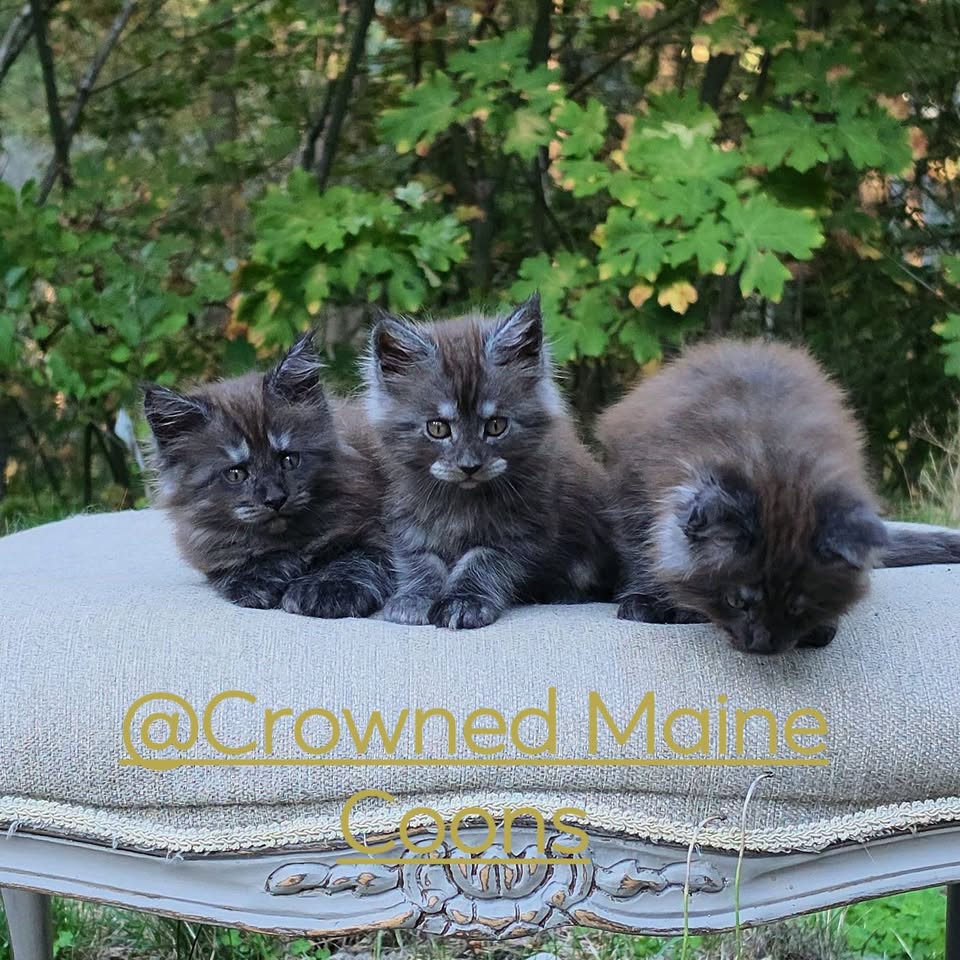
Crowned Maine Coons is based in Thurston County, Washington and states TICA and CFA registration. Ask us directly for the individual kitten’s paperwork, price, health records and written terms; this article does not assert unprovided screening results.
Ask us about your kittenCommon questions
Does registration guarantee health?
No. Registry paperwork, pedigree, clinical examinations and genetic screening have different roles. Discuss actual records with the breeder and your veterinarian.
Does a negative HCM DNA test mean a cat cannot develop HCM?
No. A test for a known variant does not exclude every cause of HCM. Ask your veterinarian how genetic testing and cardiac screening fit together.
Sources & further reading
General education, not an individual diagnosis or a claim about our kittens’ test results. Your veterinarian should guide health, nutrition and treatment decisions.